 The Walking Club
You reach toward the bowl, or simply walk past it, and your dog goes still. Maybe a low growl. It can feel like a challenge to your authority. It is not. Guarding a valued resource is normal dog behavior, and the growl is your dog using their words. The plan is to keep everyone safe first, then change what your approach predicts.
Until things improve, make guarding unnecessary. Feed your dog in a quiet, low-traffic spot, behind a gate or in a separate room if anyone might wander close. Pick the bowl up only when your dog has finished and walked away, and never remove a bowl or food while your dog is eating. Teach children never to approach a dog who is eating, and do not let anyone test whether the growl is serious.
Do not punish the growl. A dog who learns that growling brings trouble may stop warning and go straight to the next step. If your dog stiffens, snaps, lunges, or has ever bitten over food, or if children live in the home, stop here and work with a qualified, reward-based behavior professional. A bowl is not worth a bite.
Before any training, ask your vet to check your dog’s weight and health. Illness and some medications can increase hunger or irritability, and a hungry or uncomfortable dog has more reason to guard. Training works better once the physical picture is clear.
The long-term fix changes the prediction. A person walking toward the bowl should mean something better than dinner shows up, never that dinner disappears.
Start farther away than your dog cares about. While they eat, walk past at that easy distance, say “bonus,” and toss a treat that beats the bowl toward it, then keep walking. Over many meals, come a little closer, always at the pace your dog stays relaxed. Watch for the quiet early signs that you are too close: faster gulping, freezing, stopping, staring, or a stiff body. Any of these means add distance again. If you cannot find a distance where your dog stays comfortable, that is a job for a professional, with a barrier for safety.
Never practice taking the bowl away, even to give it back. That teaches your dog that people near the bowl make the food vanish, which is exactly the worry you are trying to undo.
Plenty of households manage this successfully for life: a separate feeding spot, no hovering, no grabbing, and trades done with distance and calm. Management is not failure.
Choose what fits. Nothing is saved or submitted.
Sources: ASPCA: Food Guarding. VCA Animal Hospitals: Food Bowl Aggression in Dogs.
The article is the start. The guide is the full method.
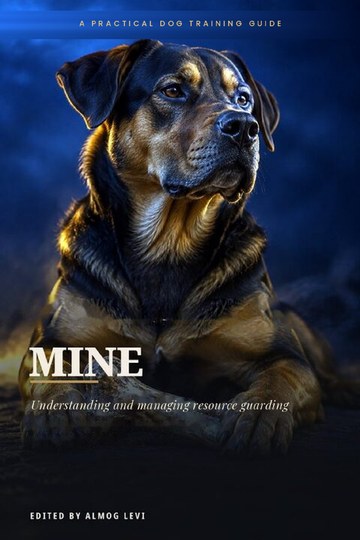 MineThe complete guide to guarding and growling · $9.99Read the guide →This guide is part ofThe Full House PackFive guides for everyone under your roof.
Describe your dog's problem and get the guidance that fits. No account needed to look.
Describe your dog's problem →