 The Walking ClubThe Walking Club
Keep day one small: a safe area, toilet opportunities, familiar food and room to rest.
Read article ↗Puppy basicsStay close, check for a toilet need, and help your puppy learn that the sleeping space is safe.
Read article ↗Puppy basicsGive your puppy short, safe, positive experiences at a distance they can handle. Socialization is not forcing every greeting or flooding them with noise.
Read article ↗Puppy basicsPuppy mouthing is common, but you still need to protect people. Offer a safe toy before hard nips, pause play calmly, and seek help if bites are severe or unsafe.
Read article ↗Puppy basicsA calm plan for the landshark phase: prevent rehearsals, offer safe chewing, respond to hard nips and know when to ask for help.
Read article ↗Puppy basicsIf biting spikes at night, lower the excitement and offer a safe chew or rest before play gets frantic. Do not punish the puppy for being overtired.
Read article ↗Puppy basicsBuild a calm, repeatable toilet-training routine without scolding your puppy for accidents.
Read article ↗Puppy basicsIntroduce a crate at your puppy’s pace, as a choice and a resting place, never a punishment.
Read article ↗Puppy basicsBegin with tiny, comfortable separations at home, arrange care for absences the puppy cannot manage yet.
Read article ↗Puppy basicsIf your puppy moves freely without the lead but stops once it is attached, the gear or its pressure may be the hard part.
Read article ↗Puppy basicsScratching, freezing or hiding after the collar goes on is information, not something to wait out.
Read article ↗Puppy basicsA new puppy needs gentle, positive experiences, not a deadline to master every building entrance.
Read article ↗Puppy basicsPlan the hallway and elevator as part of toilet training, and ask your vet which outdoor spots are safe before vaccines are complete.
Read article ↗Puppy basicsRemove access, identify the plant and call a vet promptly rather than waiting to see what happens.
Read article ↗People & safetyYour older dog finally settles with a chew. The puppy spots it and edges closer, even though there's an identical chew nearby. The older dog freezes, barks or snaps. It may look like a lesson the puppy needs to learn. You don't need to make either dog run that lesson again.
Read article ↗Home & aloneGive both animals separate resources and let the cat choose distance before any supervised contact.
Read article ↗Puppy basicsMove tempting or unsafe furniture out of reach where possible, supervise, and offer a puppy-safe chew instead. Scolding later does not teach what to chew.
Read article ↗Puppy basicsGive a busy puppy calm opportunities to rest, and distinguish normal sleep from concerning lethargy.
Read article ↗Puppy basicsWait until a bath is needed, prepare a secure surface, and introduce washing without rushing the puppy.
Read article ↗Puppy basicsBuild comfort around a parked car before trying short rides, and speak to a vet about motion sickness.
Read article ↗Puppy basicsYou want your puppy to learn that the world is safe, and you don't want to miss a chance to introduce them to new sounds. But a crowded fireworks display is not a gentle introduction. The bangs are loud and unpredictable, and you can't turn down the volume or leave in the same calm way you can at home.
Read article ↗Puppy basicsPractise small pieces of grooming at home and choose a groomer willing to work at your puppy's pace.
Read article ↗Puppy basicsYour puppy walks beside you on the usual street. On a new trail, they pull toward every smell and person, and the outing feels like work for both of you. That doesn't mean the home practice failed. A busy new place asks for more than a familiar route does.
Read article ↗Puppy basicsAsk about a short no-procedure visit, practise gentle handling, and tell the clinic if your puppy is worried.
Read article ↗Puppy basicsLet a new puppy settle first, then introduce a few calm visitors at a pace the puppy can choose.
Read article ↗Puppy basicsConfirm the safe vaccination timing with your vet and make the first outing short enough to stay enjoyable.
Read article ↗Puppy basicsIntroduce the harness in small, voluntary steps before fastening it for a real walk.
Read article ↗Puppy basicsIntroduce sounds gently, one at a time, while your puppy can still relax and move away.
Read article ↗Puppy basicsStart from a complete puppy food and your vet's advice, then divide the daily amount into predictable meals.
Read article ↗Puppy basicsA quiet night toilet break can help a young puppy learn where to go without turning the wake-up into playtime.
Read article ↗Puppy basicsBuild a voluntary paw-handling routine in tiny steps before asking for a nail trim.
Read article ↗Puppy basicsTeach the pen as a comfortable place in tiny steps, and don't confuse distress with stubbornness.
Read article ↗Puppy basicsOffer puppy-sized chews with some give, supervise them, and remove anything that breaks apart.
Read article ↗Puppy basicsCheck gates, plants, chemicals and sharp objects at puppy height before treating the garden as a free-roam area.
Read article ↗Puppy basicsUse small age-appropriate rewards, count them within the day's food, and ask a vet about diet needs.
Read article ↗Puppy basicsLet the puppy see a switched-off vacuum first, then introduce movement and sound from a comfortable distance.
Read article ↗The articles are the start. The guide is the full method.
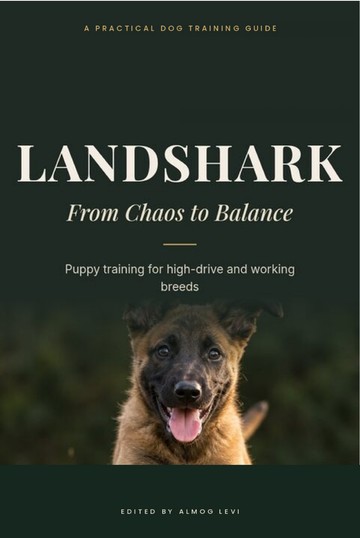 LandsharkThe complete guide to the biting months · $9.99Read the guide →This guide is part ofThe Full House PackFive guides for everyone under your roof.