 The Walking Club
Short answer: separation anxiety is distress about being apart from a person your dog is attached to. It can show as barking, pacing, drooling, damage near exits or toileting indoors. These signs can have other causes too. A vet check, safe observation and very gradual practice help you choose the right next step. Do not leave a frightened dog to cry it out.
Your dog may become unsettled when you pick up your keys or put on your shoes. After you leave, they may whine, howl, pace, pant, tremble, drool or scratch at the door. Some dogs lose interest in food. Others become quiet and withdrawn rather than noisy.
Barking or a chewed cushion alone does not diagnose separation anxiety. Hallway sounds, boredom, difficulty with confinement and unfinished toilet training can look similar. Medical problems can also cause accidents indoors or changes in behaviour.
Your next step: write down what happens before and during departures, and share the pattern with your vet. Use footage you already have, or a camera during a brief absence you already know your dog can manage. Do not extend an absence to find the point of panic.
There is no single cause that explains every dog. A move, a change of household or a sudden change in how long a dog is left alone can be part of the picture. A frightening event while alone can matter too. Some dogs have not yet learned to feel comfortable without company.
A new problem deserves a health check, especially in an older dog. Pain or changes in hearing, vision or thinking can affect how secure a dog feels. That is a reason to ask for help, not to push harder with training.
Your next step: tell your vet when the behaviour began and what changed around that time. Let them check for health problems before you treat this as training alone.
Training absences and a workday are different things. While you practise, try to avoid absences longer than your dog can comfortably manage. A friend, family member or sitter may help, provided your dog is comfortable with that person and setting. Arrange support before you need the longer absence.
A crate is not a treatment for separation anxiety. Some dogs become more distressed in one and may hurt themselves trying to get out. Choose a safe, familiar resting area that does not add worry. Do not shut a distressed dog in a crate to protect the furniture.
Your next step: arrange comfortable company for the next unavoidable absence. If you cannot find a workable option, tell your vet or qualified behaviour professional so the plan accounts for real life.
This is a starting framework to discuss with your vet or a qualified behaviour professional, not a fixed timetable. If your dog is already panicking, get help with the plan before practising departures.
1. Begin with comfortable distance at home. Let your dog rest in a familiar spot while you remain nearby. Quietly reward relaxed resting. Start with a small movement away only if they remain comfortable. Do not begin by closing a door on a dog who is worried by it.
2. Make departure cues ordinary. If keys or shoes bring worry, practise a small version of that cue without leaving. Pick up the keys, put them down and carry on at home. Keep it easy; if even that worries your dog, make the step smaller with professional help.
3. Try an absence shorter than your dog's comfortable limit. Use what you already know from safe observations, not a test that continues until they become upset. The first step may be a brief movement out of sight. Return before worry begins.
4. Build only while your dog stays relaxed. Repeat comfortable steps and add a little time when they are coping. Mix in easier, shorter absences rather than making every attempt longer. Record the time and what your dog did, so the next step follows their response rather than the calendar.
5. Stop when worry appears. If your dog becomes anxious, return calmly and end that absence. Make the next practice easier. If there is sustained distress or panic, stop the session and ask for help rather than trying another departure to repair it. Do not wait for silence before helping a frightened dog.
Your next step: choose one already-comfortable step to discuss or practise today. If you do not have one, start with professional support, not a longer test.
Do not punish barking, damage or accidents when you return. These can be signs of distress, and punishment can make the worry worse. Keep departures and returns calm.
A food toy can be part of the setup for some dogs, but it is not a complete plan for an anxious dog. A dog who is very worried may not eat. Eating a snack does not, by itself, show that the whole absence was comfortable.
Your next step: review what happened across the absence, not just whether the toy was emptied or the house stayed quiet.
Contact your vet and a qualified behaviour professional if your dog panics, tries hard to escape, cannot manage even a very small separation or is not progressing with an easy plan. If your dog is injured, stop the practice, keep them safely supervised and call your vet for prompt advice.
Some dogs need medication alongside gradual training. Your vet will tell you whether that is appropriate. Do not choose, start, change or stop medication yourself.
There is no fixed recovery date or promise that every dog will manage a full day alone. The plan needs to fit your dog's response and the support you can arrange.
Your next step: bring your notes and any safe existing footage to the appointment, and ask for a plan that includes both training and care while you are away.
Sources: Read 3 October 2026. VCA Animal Hospitals, Separation Anxiety in Dogs. ASPCA, Separation Anxiety. Dogs Trust, signs, causes and support. Dogs Trust, time-alone training. Blue Cross, home alone. Merck Veterinary Manual, Behavior Problems in Dogs.
General education only, not veterinary advice or a plan for your individual dog. If you are worried about your dog's behaviour or health, contact your vet. See our legal page.
This guide covers gradual alone-time practice, observation and care coverage. It does not cover medical care or replace a tailored plan from your vet or behaviour professional. Despite its title, it does not promise a cure or a fixed timeline.
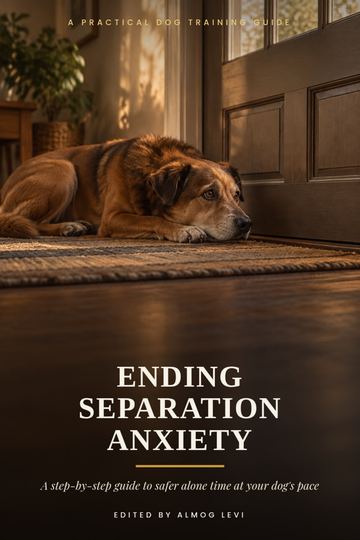 Ending Separation AnxietySmall practice steps, care coverage and progress notesRead the guide →Optional broader readingThe Quiet Hours PackIncludes this guide and four other guides on care handoffs, noise worries, settling and older dogs. The pack does not cover medical care.
Describe your dog's problem and get the guidance that fits. No account needed to look.
Describe your dog's problem →