Short answer: If your dog barks when you leave, the bark alone can't tell you why: it could be separation-related distress, boredom, or a reaction to noises outside. Record a short, safe absence and note when barking starts and whether you see pacing, drooling or escape attempts. If it looks like panic, don't make long absences a test; arrange company and work with your vet on a gradual plan.
How do I find out why my dog barks when I leave?
Set up a camera or phone for a brief absence. Note when barking begins, whether it stops, and any pacing, panting, drooling, escape attempts or damage near doors and windows. The ASPCA notes that dogs with separation anxiety may show distress soon after you leave. A recording gives you observations, not a diagnosis.
If barking happens while you're home too, note what comes just before it. That needs a different plan; see barking for attention.
What should I do if the recording shows panic, step by step?
- Stop endurance tests. Repeating long absences in the hope your dog "gets used to it" can make distress worse.
- Arrange company. A friend, family member or sitter for unavoidable absences, as a bridge while you work on it.
- Talk to your vet. Especially if the behavior is new, worse, or your dog is injuring themselves.
- Notice departure cues. Keys, shoes or a bag may start the worry before you leave.
- Practice tiny absences. Work at a length your dog can handle, and advance only while they stay comfortable. See practicing alone time.
- Keep a simple log. Date, length of absence, when barking began, other signs, and whether your dog settled.
Is a quiet dog a calm dog?
Not always. A quieter minute is progress, but silence alone doesn't prove your dog feels safe. Look at the whole dog on the recording, and compare recordings rather than relying on what a neighbor heard. See separation anxiety signs and a plan.
When should I get help?
If your dog can't tolerate even a very short absence, is injuring themselves, or isn't improving, ask your vet promptly and for a referral to a qualified behavior professional. Some dogs need veterinary treatment alongside training; that's your vet's decision.
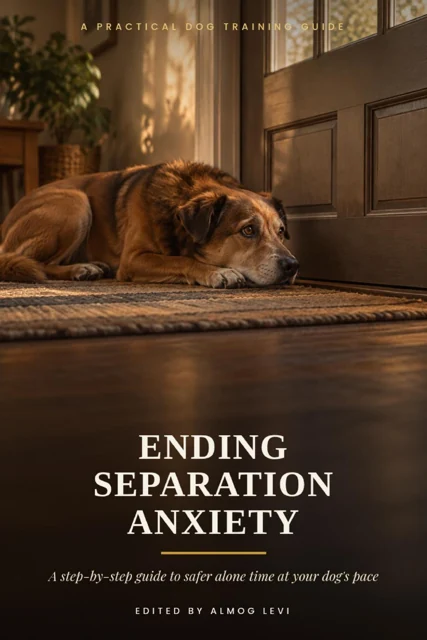
If the recording shows real distress, Ending Separation Anxiety is a deeper resource to use alongside your vet's advice. The first chapter is free to read.
Sources
Does one of these sound like yours?
Choose what fits. Nothing is saved or submitted.
Sources & care notes
This article is general education, not veterinary advice. If your dog seems unwell, is in pain, or something changed suddenly, call your vet. If it could be an emergency, do not wait.
Frequently asked questions
Is it separation anxiety or boredom?
The bark alone can't tell you. Record a short, safe absence and look for pacing, panting, drooling or escape attempts.
Should I let my dog cry it out?
Not if the recording shows panic. Long absences as endurance tests can make things worse.
What can I do while working on it?
Arrange care or company for unavoidable long absences. It's a management bridge, not a cure.
What should I track?
When barking starts, whether it stops, and the earliest cue that changes your dog's behavior, such as keys or shoes.
When should I call the vet?
If the barking is new or worse, your dog is injuring themselves, or they can't manage even a very short absence.