Short answer: When a dog barks on leash and lunges, it is usually fear or frustration, not dominance: the leash takes away their option to move away or greet, and the reaction often "works" because the other dog leaves. What helps is a calm three-part plan: cut down the rehearsals, work at a distance where your dog can still think and take food, and pair the trigger with good things until it means something new.
What is actually happening when my dog reacts on leash?
Most leash reactions happen when a dog goes past their threshold: the point where they stop thinking and start reacting. Below it, your dog can see another dog, notice you and take a treat. Past it, barking and lunging take over.
The leash adds pressure. An off-leash dog can curve away, sniff or approach in an arc. A leashed dog can't. Many dogs learn that barking and rushing forward makes the other dog go away, and from their side, it works every time. That is how the habit grows: trigger appears, reaction happens, trigger leaves.
Is my dog being aggressive or dominant?
Usually not dominance. Many reactive displays are fear or frustration at full volume. The dog who desperately wants to greet and the dog who desperately wants space can look the same when they're over threshold. If there is any bite risk, treat it seriously and get individual help.
How do I stop my dog barking and lunging on leash, step by step?
- Manage first. Walk at quieter times, choose routes without the fence-fighting house, and practice a cheerful U-turn so you can leave early.
- Find your dog's working distance. This is the distance where your dog can see another dog and still eat, sniff and hear their name. See how to find a reactive dog's threshold.
- Pair the trigger with good things. Other dog appears, treats start. Other dog leaves, treats stop. You are changing what the trigger predicts, not rewarding barking.
- Keep sessions short. A few calm repetitions, then leave while your dog is still comfortable.
- Close the distance slowly. Only move closer when your dog is consistently relaxed at the current distance. If reactions return, add space again.
- Watch for stress build-up. After a hard day, keep walks quiet for a while. See why familiar triggers can suddenly feel harder.
For more background on reward timing, choosing suitable rewards and structuring short practice sessions, see Healthy Dogs Meals' guide to reward-based dog training basics.
How long does it take for leash reactivity to improve?
There is no set timetable. Some dogs change sooner, others need more time and support, and a good week can be followed by a hard walk. Look for shorter reactions, faster recovery and more relaxed time outside rather than a straight line toward the dog park.
When should I get professional help?
If reactions are severe, getting worse, involve bite risk, or you can't hold the leash safely, ask your vet and a qualified reward-based behavior professional for an individual plan. A sudden change in behavior can have a medical cause, so a vet check is a good first step.
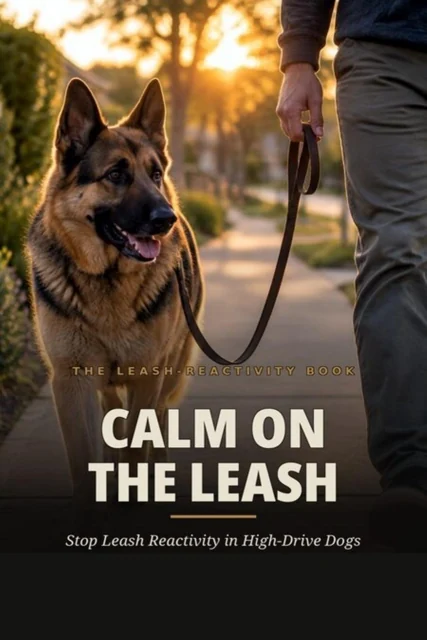
For a fuller walk-by-walk plan, the Calm on the Leash guide covers barking and lunging in more depth. You can read the first chapter free on the site.
Which part is hardest?
Choose what fits. Nothing is saved or submitted.
Sources & care notes
Sources: Dogs Trust, reactive dogs. VCA Animal Hospitals, aggression toward unfamiliar dogs: treatment.
This article is general education, not veterinary advice. If your dog seems unwell, is in pain, or something changed suddenly, call your vet. If it could be an emergency, do not wait.
Frequently asked questions
Is my dog aggressive if they bark and lunge on leash?
Usually not. Most on-leash reactions are fear or frustration. Take any bite risk seriously and get individual help if you see it.
Why does my dog only react on leash?
The leash removes the option to move away or approach naturally, so pressure builds. Off leash, many dogs simply curve away.
Am I rewarding the barking if I give treats?
No. Treats given at a comfortable distance change how your dog feels about the trigger. The other dog leaving is what tends to reinforce barking.
Where should we start?
Start below threshold: a distance where your dog can still eat, sniff, turn away and think.
Will punishment stop leash reactivity?
Punishment can suppress the warning signs while leaving the fear or frustration in place. Force-free distance work is the safer route.