 The Walking Club
Short answer: a relaxed dog usually has a loose body, soft eyes and ears resting in their usual position. A worried dog may look tense, turn away, tuck their tail or lick their lips. These are clues, not a diagnosis. Watch what is happening around your dog as well as their face, body and tail. If they seem uncomfortable, stop the interaction and give them room.
A wagging tail does not always mean a happy dog. Dogs can wag when they feel worried too. Look for the rest of the picture: is the body loose or stiff? Are they choosing to come closer, or trying to move away?
Context matters. A lip lick beside the food bowl may be about dinner. The same movement during a greeting, alongside a tense body and ears held back, may be a sign of worry. Get to know how your own dog looks when they are relaxed.
Your next step: compare their whole posture with how they look during a quiet, comfortable moment at home.
Look for a loose body, a relaxed face and soft eyes rather than a fixed stare. Their ears rest naturally, and their movements may look easy and wiggly. Their mouth may be open and relaxed, but an open mouth on its own does not tell you how they feel.
A playful dog may lower their front end while keeping their bottom up. A relaxed dog may also choose to come closer for attention. Keep looking at the whole body rather than treating either sign as a promise that every interaction is welcome.
Your next step: let your dog choose whether to come closer, and stop if they turn away or tense up.
Worry can be quiet. You may see repeated lip licking when there is no food, yawning when they are not tired, ears held back or the whites of their eyes showing. They may lower their body, tuck their tail, turn their head away or lean away from a person.
Other signs include pacing, hiding, trembling or panting when they are not warm or recovering from exercise. Stress and anxiety can share these signs. One yawn, one tail position or a short clip is not enough to tell you the cause.
Your next step: pause what is happening and calmly move away from whatever seems to be worrying your dog.
A dog who goes stiff, fixes their gaze, growls, shows teeth or snaps needs the interaction to stop. A bite can follow if the dog still feels threatened. Do not wait for a growl before listening to their earlier signs.
Do not tell them off or force a greeting. Ask people to step back and stop reaching towards them. If you can do so safely, use a door or gate to keep people and other animals apart while everyone settles.
Your next step: end the interaction and create safe space without crowding or grabbing your dog.
Body language helps you notice discomfort; it cannot tell you whether your dog has a medical problem. Pain or illness can affect behaviour, and some signs that look like stress can have a health cause.
If the change is new, your dog seems uncomfortable, or the worry keeps returning, a quick call to your vet is a good next step. Tell them what changed and when it happens. Your vet can check for health problems and, if needed, recommend a qualified behaviour professional.
Your next step: contact your vet with a short description of the change rather than trying to diagnose it from body language alone.
Read on 3 October 2026: RSPCA: understanding a dog's body language; Dogs Trust: how to understand your dog's body language; Blue Cross: stress in dogs; PDSA: how to tell if your dog is happy; PDSA: dealing with dog aggression.
General education only, not veterinary advice or a diagnosis for your individual dog. If your dog's behaviour changes or you are concerned, contact your vet. See our legal page.
The Handler supports observation and calm handling. It is not a diagnosis guide and does not cover medical care or an individual anxiety treatment plan.
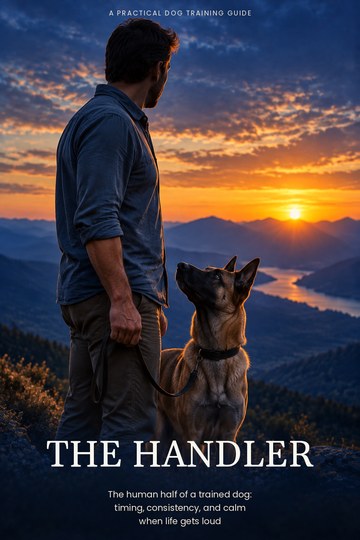 The HandlerClear cues, rewards and calm handlingRead the guide →Background reading · optional packThe Busy Brain PackFive broader training guides, including The Handler. Not needed to read body language.
Describe your dog's problem and get the guidance that fits. No account needed to look.
Describe your dog's problem →