 The Walking Club
Short answer: first find out when your dog barks and why. Then change what you can, teach a better habit, and keep your neighbors in the loop.
Dogs Trust says barking, howling and whining are normal ways dogs show feelings, wants and needs, and that the first step is finding out why your dog barks. Once you know, you can change the environment so they do not feel the need to bark as much. The RSPCA says to check for health issues first, such as hearing problems, and that a dog who barks when you are not around may be distressed.
If your dog barks when left alone, it may be distress, not naughtiness. See barking when left and separation anxiety signs.
Dogs Trust suggests changing the set up, routine or walk to avoid triggers that lead to barking. See barking at the window. Ultrasonic devices are not a fix: see ultrasonic bark devices.
Tell your neighbors you are working on it. If the barking is new, ask your vet to check your dog.
Choose what fits. Nothing is saved or submitted.
The article is the start. The guide is the full method.
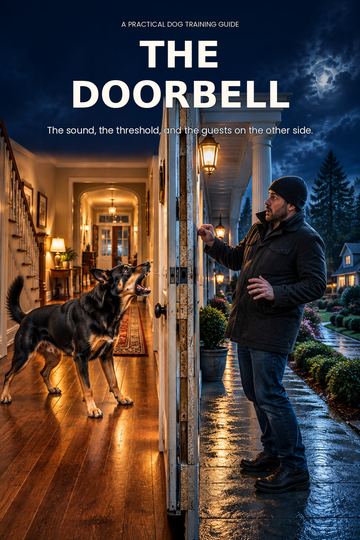 The DoorbellThe complete guide to arrivals and the door · $9.99Read the guide →This guide is part ofThe Four Walls PackFive guides for life inside your four walls.
Describe your dog's problem and get the guidance that fits. No account needed to look.
Describe your dog's problem →