 The Walking Club
Short answer: dogs bark and howl to tell us something. They may be excited, worried, bored, lonely or asking for something. Start by noticing when it happens. If your dog has suddenly started barking or howling a lot more than usual, a quick call to your vet comes first, because pain or illness can be behind it.
“Something is out there.” Many dogs bark at sights and sounds outside the home. A worried dog barks to say something feels wrong. Think of a dog at the window, a knock at the door, or noises in the hallway. What to do: note the trigger, then make it easier to avoid, for example by closing the curtains for a while.
“Someone is at the door.” The doorbell, a knock and the delivery person are the classics. Dogs often feel excited or unsure when someone arrives. What to do: pick one doorway moment and reward your dog for staying calm there.
“I am scared.” A loud bark can come from a dog who feels unsure, not a dog who feels brave. Loud engines and sirens are common triggers. Barking and lunging on walks often has the same feeling underneath, and our guide to barking on leash is a gentle place to start. What to do: give your dog more distance from the thing, and do not tell them off.
“I want something.” Some dogs bark for food, play or company. You might see it while you make dinner or when they want to play. What to do: give your dog the thing when they are quiet, not while they are barking.
“I am bored.” A dog with too little to do may bark to make something happen. What to do: add a little more walking, sniffing, play and chewing to the day, at around the same times each day.
“Please come back.” Dogs who find being alone hard may bark, howl or whine when you leave. This is different from the other kinds of barking, and it is not naughtiness. Our guide to barking when you leave and our separation anxiety guide explain the signs. What to do: if it happens, talk to your vet, who can point you to a qualified behaviour professional.
Howling is another way of calling out. Many dogs howl at sirens, music or another dog howling. This kind usually stops when the sound stops. Some dogs howl to ask for attention, and some howl when they are left alone. A dog who howls only when separated from you, often with other signs such as pacing or chewing things, may be finding it hard to be alone. What to do: notice when it happens and what came just before.
A howl can also mean your dog is hurt or unwell. If a normally quiet dog starts howling, a quick call to your vet is the right next step. Our guide to signs of pain can help you spot other clues.
Call your vet if your dog has started barking or howling much more than usual, or has begun out of the blue. Pain or illness can change how much a dog vocalises, and your vet can rule them out. If your dog seems unwell in other ways too, our guide to when to call a vet will help. A sudden change at night is a common example, and this guide walks through what to check.
Most dogs do better when you change what happens around the barking. Shouting or telling your dog off can feel like attention, and attention can keep the barking going. Stay quiet and calm, wait for a pause, and then reward the quiet. Dogs learn from what pays, so reward the moments you want more of.
It also helps to read your dog's mood first. Our body language guide shows what a worried, excited or relaxed dog looks like, so you know what the barking is about. Some barking is normal, and most dogs will never be completely silent. The aim is a dog who feels settled, not a silent one.
If the barking is hard to live with, or you are worried about it, ask your vet to point you to a qualified, reward-based trainer or behaviour professional.
Sources: RSPCA, barking dogs: rspca.org.uk. PDSA vets, why does my dog keep barking: pdsa.org.uk. Dogs Trust, how to stop your dog barking: dogstrust.org.uk. Blue Cross, how to stop your dog barking: bluecross.org.uk. VCA Animal Hospitals: barking, howling. ASPCA, howling: aspca.org.
General education only, not veterinary advice or a plan for your individual dog. If your dog's barking or howling has changed suddenly, please contact a vet. See our legal page.
This guide does not cover medical care, being left alone, or storm and noise fears. It is background on calm arrivals, visitors and the door.
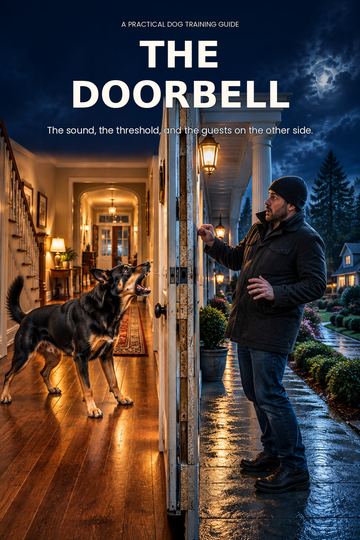 The DoorbellThe complete guide to arrivals and the door · $9.99Read the guide →This guide is part ofThe Four Walls PackFive guides for life inside your four walls.
Describe your dog's problem and get the guidance that fits. No account needed to look.
Describe your dog's problem →